
About those smelly tonsil stones and how to remove them and be rid of them for good
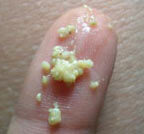
Tonsil stones are another cause of halitosis (bad breath). They are formally known as tonsilloliths, and they are objects, usually made of calcium, that grow and develop over time in the crypts and crevices of the tonsils. They are typically white with a yellow hue, and some people describe them as white spots in the throat or white spots on the tonsils. Tonsil stones are common in adults and rare in children and babies. There are few noticeable symptoms of tonsilloliths other than bad breath, but for most of us here at BreathMD, that is reason enough to find out whether we have them and get them out if we do.
- What causes tonsil stones
- Side-effects of tonsil stones
- How do you know if you have tonsil stones
- How to remove tonsil stones
- Prevention
What causes tonsil stones
So how do you get tonsil stones? What causes tonsilloliths? Those are very good questions, but unfortunately the exact causes are unknown. While the tonsils play an important role in trapping harmful bacteria before they enter the rest of your body, they also tend to trap food, mucus, dead cells, and other particles. It is generally accepted that tonsil stones are caused by the food, particles, and bacteria that accumulate on and in the tonsils. These particles are broken down over time by saliva and digestive enzymes, and most of what remains is the hard part of the particle (usually calcium). The softer parts are broken down and eventually washed away.
Studies have also shown a correlation between patients who have tonsilloliths and patients who suffer from post-nasal drip, which is another cause of bad breath.
Side-effects of tonsil stones
There are various signs and symptoms of tonsil stones. Below is a list of their side effects. Keep in mind that tonsil stones vary greatly in size, and that many of these symptoms only appear in patients who suffer from large or rare giant tonsilloliths.
- Bad breath (halitosis)
- Pain on swallowing
- Difficulty swallowing
- Metallic taste in mouth
- Coughing fits
- White spots on tonsils
- Earache
- Swollen tonsils
- Sensation that something is stuck or lodged in the back of the throat
- Putrid taste in the mouth that returns quickly after brushing one’s teeth
While the side effects can be unpleasant and uncomfortable, they are rarely life-threatening, and there is no evidence that they negatively affect one’s overall health.
How do you know if you have tonsil stones
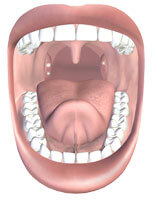
If you suffer from the symptoms of tonsilloliths mentioned above, you may have them. Keep in mind that it is extremely rare to suffer from tonsil stones if you have had a tonsillectomy and had your tonsils removed.
You can usually determine whether you have tonsil stones through visual inspection. Grab a flashlight and face a mirror. Open your mouth so that you have a clear view of your tonsils. Shine the light on the tonsils and inspect each of them thoroughly for any white spots or white objects. You can also take a clean Q-tip and use it to pull back the flap of the tonsils to inspect the crypts. If you do not see any white spots or objects, you should be good to go. If you do see white objects, they might be tonsil stones, debris from a larger tonsil stone, or a tonsil stone in development.
Tonsil stones may sometimes be hidden from view. Just because you can’t see them does not mean you don’t have any. Many people report that, although they don’t see any tonsil stones, they often cough them up, so they know they have them.
Tonsil stones can also be detected through X-rays and CAT scans, and they are often discovered accidentally through these methods.
How to remove tonsil stones
There are various methods used to treat and remove tonsil stones. They are often dislodged unintentionally by coughing or even swallowing. The simplest method of removal is to take a Q-tip (people report that a bent bobby pin works well) and gently apply pressure to the white stone until it is dislodged. If that doesn’t work, try applying pressure from different angles and using a back-and-forth motion. If a stone is hard to reach, you might take another Q-tip and use it to pull back the flap or part of the tonsil so you have better access. Remember to be very gentle. Your tonsils are fragile and may bleed if handled recklessly. A little bleeding is common when removing tonsil stones, but be gentle and take your time to minimize the bleeding and irritation to your tonsils.
Tonsil stones can also be removed effectively by using an oral irrigator. Ideally, the best tool is the kind of oral irrigator used to irrigate the sockets left by the removal of wisdom teeth. Other oral irrigators may be used, such as a WaterPik or the SinuPulse Irrigation System but be sure to use the lowest setting at first, and if you feel even the lowest setting would be too powerful for your tonsils, then don’t do it. CAUTION: You may rupture or puncture a tonsil if the water stream is too strong. Be careful and sensible. Take your time while irrigating, and hopefully that will get rid of your tonsil stones.
Water fasting - Many people, myself included, have reported that tonsil stones come out easily while fasting. Almost every time I fast, I cough up several nasty tonsil stones. To do this, drink only water or tea through the morning and afternoon; usually around noon I can feel them getting loose, and I can cough them out. Fasting for longer periods might be even more helpful.
If you have tried the methods above and they did not work, consider seeing a doctor. Doctors may remove tonsil stones by curettage, laser, or even surgery if necessary. If they are really bad and keep recurring, the doctor may suggest a tonsillectomy (removal of the tonsils). The doctor will let you know what the best treatment for your tonsil stones would be.
Should I get my tonsils removed?
Many people consider getting their tonsils removed if they suffer from recurring tonsil stones and bad breath. It is a hard decision to make, and there are many things to consider on your own and with your doctor before removing them. Recovery time from a tonsillectomy increases as the patient gets older, and many doctors discourage it for adults; that said, many adult patients have had them removed, reported that the recovery wasn’t too hard, and are loving life after having them out. Research the topic thoroughly. If tonsil stones are the only reason you want them out, first try removing the stones and applying the preventive measures outlined in the next section. If you just can’t get rid of the tonsil stones, and if your tonsils are causing you to have tonsillitis and get sick regularly, it might be best just to rip them out yourself. Just kidding — get a doctor to do a tonsillectomy.
Prevention
While removing tonsil stones is possible, it is important to take measures that stop them from returning. We believe the stones are caused by particles that get trapped in the tonsils, so to prevent them it is important to clean your tonsils regularly and keep them free of the particles that would eventually break down and cause tonsilloliths to develop. Here is a list of methods you can use to prevent tonsil stones.
-
Brush and gargle after meals - Brushing your teeth and gargling a germ-killing, oxygenating solution after meals is an excellent way to ensure that your breath is fresh and your mouth and tonsils are free of food particles that would eventually cause bad breath and tonsil stones. Before brushing after a meal, it is a good idea to swish water in your mouth and spit it out until you no longer see any food particles coming out. Then drink a bit of water to wash down any particles in the back of your throat and tonsils. Now brush your teeth, and be sure to gargle mouthwash thoroughly. Doing this after each meal will help your overall oral health and keep your mouth free of food particles.
-
Irrigate your tonsils regularly - Using a gentle oral irrigator, wash your tonsils often, at least once a week, to ensure no particles have lodged in them. Try the SinuPulse Irrigation System to clean your tonsils regularly. You may also use a WaterPik with the irrigator tip on the lowest pressure setting. These irrigators work best with warm water.
-
Try nasal irrigation - While it isn’t proven that post-nasal drip causes tonsil stones, it would still be prudent to clean out your nasal passages regularly, just in case too much mucus drainage in the back of the throat is a contributing cause. Check out our articles on nasal irrigation and post-nasal drip to discover other methods of treating post-nasal drip.
-
Use tonsil sprays and oxygenating mouthwash - Tonsil sprays and oxygenating mouthwashes such as TheraBreath Oral Rinse, used regularly, help break down the particles faster and hinder the development of tonsil stones. They also help neutralize sulfur-producing bacteria to freshen your breath.
-
Take oral probiotics - Although this isn’t yet backed up by studies, many people have reported that taking oral probiotics has stopped or slowed the growth of tonsil stones. To learn more, read our article on oral probiotics.
Keep in mind that you will probably not see immediate results. These preventive measures will hinder the growth of future tonsil stones, but do little to remove the ones you currently have. Try to remove the tonsil stones you have now, and then follow these preventive measures to keep new ones from forming. Over time you should notice results, but don’t give up after a couple of weeks — it might take months.
Also, do not neglect the rest of your oral health care while trying to get rid of tonsil stones. Read our article on how to get rid of bad breath for an overview of a basic oral care regimen that will help you keep your breath fresh.
If you take the preventive measures above, hopefully you will be rid of tonsil stones for good and eliminate them from your life!