
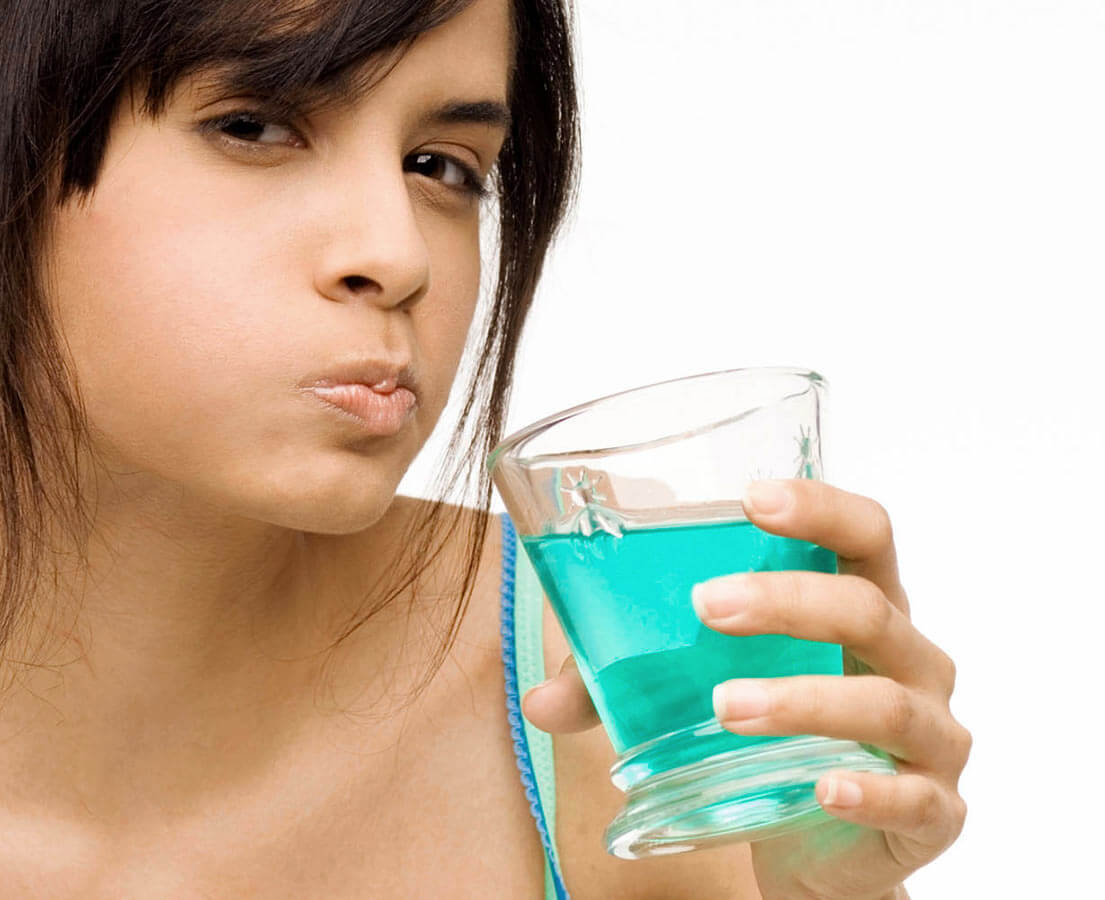
The which, why, and how of mouthwashing with mouthwash
Using mouthwash is a good way to maintain your oral health and get rid of bad breath. It reaches the areas a toothbrush can’t, such as between the teeth, the back of the throat, and the inside of the cheeks. In this article we’ll cover how to use mouthwash, how to gargle, different mouthwash solutions, and general tips for getting the most out of it.
How to use mouthwash
-
Pour the amount of mouthwash recommended by the manufacturer into your mouth.
-
Rinse and swish vigorously for 30-60 seconds.
-
At this point you may spit the solution out and use a fresh batch to gargle, or simply keep the solution that’s already in your mouth.
-
Gargle the solution for 30-60 seconds as well. That might seem long, but it’s important, because a lot of the bacteria that cause bad breath live in the back of the mouth near the throat.
-
Spit the solution out into the sink.
At this point you can rinse your mouth out with water, or leave the residual mouthwash in to keep working a bit longer. If you leave it in, try not to eat or drink anything for 10 minutes. If you use a strong mouthwash with a high concentration of alcohol or hydrogen peroxide, it’s better to rinse, since leaving it in may irritate or dry out your mouth or cause other problems. Test different methods to see what works best for you.
Use mouthwash before or after brushing?
There’s a long-running debate over whether to use mouthwash before or after brushing your teeth. There are logical arguments for both, but few studies statistically prove which is most effective. The people and dentists who recommend using it first argue that rinsing before brushing loosens the plaque and particles on and between the teeth, so they’re more easily removed when you brush afterward.
The other side argues that mouthwash does little to loosen particles in such a short time, and that it’s more effective after brushing, when you can thoroughly rinse and disinfect a mouth that brushing has already cleared of plaque and particles. If you use mouthwash after brushing, you can also leave the residual mouthwash in by skipping the water rinse, which gives it longer to work.
How to Gargle
-
Hold some mouthwash solution in your mouth.
-
Take a deep breath.
-
Tilt your head back as far as you can.
-
Open your mouth as wide as you can (I find this works better than barely opening it).
-
Say “Ahhhh,” like you do at the doctor when they’re checking your throat.
-
You don’t have to use a lot of air or say “ahhh” loudly. I find that saying “ahhh” at as low a pitch as I can, without using much air, works best for me. Do it as slowly as you can without making yourself cough or gag. If you do it too slowly, the solution will slide down your throat and cause a coughing fit.
-
Once you run out of air, tilt your head forward to its normal position to rest your neck and take in another deep breath.
-
Tilt your head back and repeat the process. It usually takes 3-4 breaths and gargling sessions to meet the 30-60 second requirement.
Best Mouthwash Solutions
Avoid Alcohol
Although alcohol works well as an antiseptic in mouthwash, it’s unfortunately too harsh and dries out the mouth. Mouthwash that contains alcohol usually holds about 20-30%. That’s why it burns so much when you swish and gargle it. Used regularly, this alcohol can damage the cells in the mouth and cause oral sores over time.
A dry mouth is bad news when it comes to bad breath. Alcohol acts as a desiccant and dries out the mouth, which in turn lowers saliva production. Saliva is very important in fighting bad breath, because it’s oxygenated, and that kills the anaerobic bacteria in the mouth.
When choosing a mouthwash, pick one that’s free of alcohol. Most mouthwashes do contain alcohol, but a few alcohol-free options are starting to appear on the market. Even Listerine, famous for its burning sensation, has recently put out an alcohol-free mouthwash. Check the list of ingredients on the back before buying.
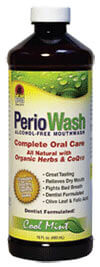
BreathMD’s Favorites: At BreathMD, when we aren’t using our own home-brewed mouthwash, you will find us using Biotene and Periowash.
Effective Mouthwash Ingredients
Several alternatives to alcohol are being researched. Dental researchers have found that oxidizing chemicals are effective at killing the anaerobic bacteria and neutralizing the volatile sulfur compounds the bacteria produce. Some oxidizing chemicals found in mouthwash are hydrogen peroxide, zinc chloride, and chlorine dioxide.
Check out our article on making your own homemade mouthwash in order to make your own inexpensive and effective mouthwash.
Use Warm Water
When diluting commercial mouthwash, or when using a solution you mixed yourself, use warm water. Warm water simply cleans better than cold water. That’s the same reason it’s best to wash dishes in the hottest water you can comfortably stand.
After brushing, scraping, and using mouthwash, it’s a good time to take some Oral Probiotics to encourage the growth of healthy bacteria over the bacteria that cause bad-breath odor.