
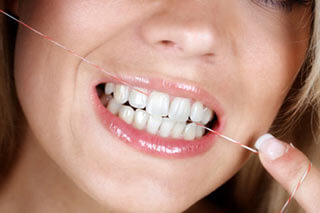
The proper technique of flossing your teeth
This article explains everything you need to know in order to properly floss your teeth.
- Why Floss?
- How often should you floss?
- What type of floss should you use?
- When? Before or after brushing?
- How to floss
Why floss?
Flossing is very important if you want fresh breath. No matter how well you brush, there are limits to where the bristles can reach. Proper flossing removes the plaque and food particles that brushing leaves behind. If you do not floss, the food particles trapped between your teeth start to break down and give you bad breath. Worse, they can lead to gum disease and tooth decay.
How often should you floss?
It is recommended that you floss at least once a day, but try to floss before every brushing. The most important time to floss is before you go to sleep, so that food particles do not sit between your teeth and decay all night. At a minimum, make sure you floss every night before bed.
What type of floss should you use?
There are basically two types of floss to choose from:
-
Nylon (multifilament) floss: This floss is made of many intertwined strands.
- Pros: Holds mouthwash better, and some say it removes particles better.
- Cons: Tends to break more easily, strands may get stuck between teeth, and it is thicker, so it can be harder to fit between teeth.
Popular multifilament floss: Reach Gentle Gum Care Floss
-
PTFE (monofilament) floss: This floss is a single strand, usually made of Teflon.
- Pros: Easier to slide between teeth.
- Cons: Tends to bunch up and become ineffective if you use the same portion of the floss to floss many teeth.
Popular monofilament floss: Oral-B Glide Dental Floss
Try both types to figure out which you prefer.
When? Before or after brushing?
Floss before brushing. Flossing loosens the plaque and particles between your teeth, and brushing afterward helps remove them. After you brush, use mouthwash, or swish water around your mouth and spit it out, to clear away the unwanted particles.
How to floss
-
Get a piece of floss 16 to 22 inches long.
-
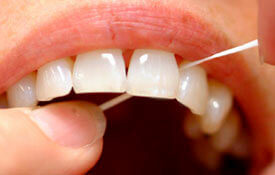
Wind one end around one index finger about three times, and wind the other end around your other index finger three or more times.
-
Grip the floss with your thumbs and slide it between two teeth, moving it up and down and in and out several times from different angles.
-
As you work through your teeth, you want a fresh portion of floss, so unwind a loop from one finger and wind it onto the other as you go.
-
When you have finished all your teeth, rinse your mouth out to remove the dislodged particles.
Note: If your gums start to bleed a little, don’t worry — it happens. Just be a little more gentle next time.